Why Topping a Tree Often Causes More Harm Than Good
The Appeal and the Reality of Tree Topping
When a tree grows too tall for comfort, or when branches start reaching toward power lines and roof edges, the quickest-looking fix is often to chop the whole top off. This practice, commonly called tree topping, is a drastic form of pruning where the main leader and upper limbs are cut back to stubs. It is easy to see why a homeowner might consider it. Topping can instantly reduce a tree's height and make a property look tidier in a single afternoon. But what seems like a fast solution often sets the stage for bigger, more expensive problems down the road.
Tree topping is not a legitimate pruning technique in the eyes of professional arborists. It is a response to a problem that creates a cascade of new ones. When you remove the top of a tree, you strip away the majority of its leaf-bearing branches. Leaves are the tree's food factories. Without them, the tree's energy reserves are suddenly cut short. The tree then enters a survival mode, pushing out many weak, fast-growing shoots from the cut stubs. These shoots are poorly attached to the trunk and are prone to breaking off in storms. Over time, the tree becomes more hazardous, not less.
How Topping Damages Tree Structure and Health
To understand why topping is so harmful, it helps to know a little about how a tree grows. A tree's natural branching structure is built around a central leader and a network of limbs that taper from trunk to tip. This design distributes stress evenly across the whole crown. When a tree is topped, the central leader is destroyed. The remaining stubs are large wounds that the tree cannot seal properly. The branch collar, the swollen area where a branch meets the trunk, is the tree's primary defense against decay. Topping cuts often remove or damage the branch collar, leaving the tree open to infection from fungi and bacteria.
The new growth that emerges from these stubs is called epicormic growth or water sprouts. These shoots grow vertically from the cut surface and are attached only to the bark of the stub, not to the deeper wood. This makes them inherently weak. A strong wind, a heavy snow, or even the weight of their own leaves can cause these sprouts to snap off. When they break, they often tear down the side of the trunk, creating long, open wounds that invite more decay. The tree's overall crown structure is compromised. What was once a balanced, resilient shape becomes a collection of unstable, bushy clusters.
Topping also triggers a stress response that depletes the tree's stored carbohydrates. The tree uses its energy reserves to push out all that emergency growth. Over the next few years, the tree may appear bushy and full, but its internal defenses are weakened. It becomes more vulnerable to pests like borers and diseases like oak wilt. The tree's root system, which is roughly the size of the tree's canopy, is suddenly left without enough food from the leaves. The roots begin to die back, reducing the tree's ability to take up water and nutrients. This makes the tree more susceptible to drought stress and further decline.
The Long-Term Problems Topping Creates
The problems that start with a topped tree do not stop at the tree itself. They often affect the property around it. Here are some of the most common issues that arise in the years after a tree is topped.
Increased Hazard and Storm Damage Risk
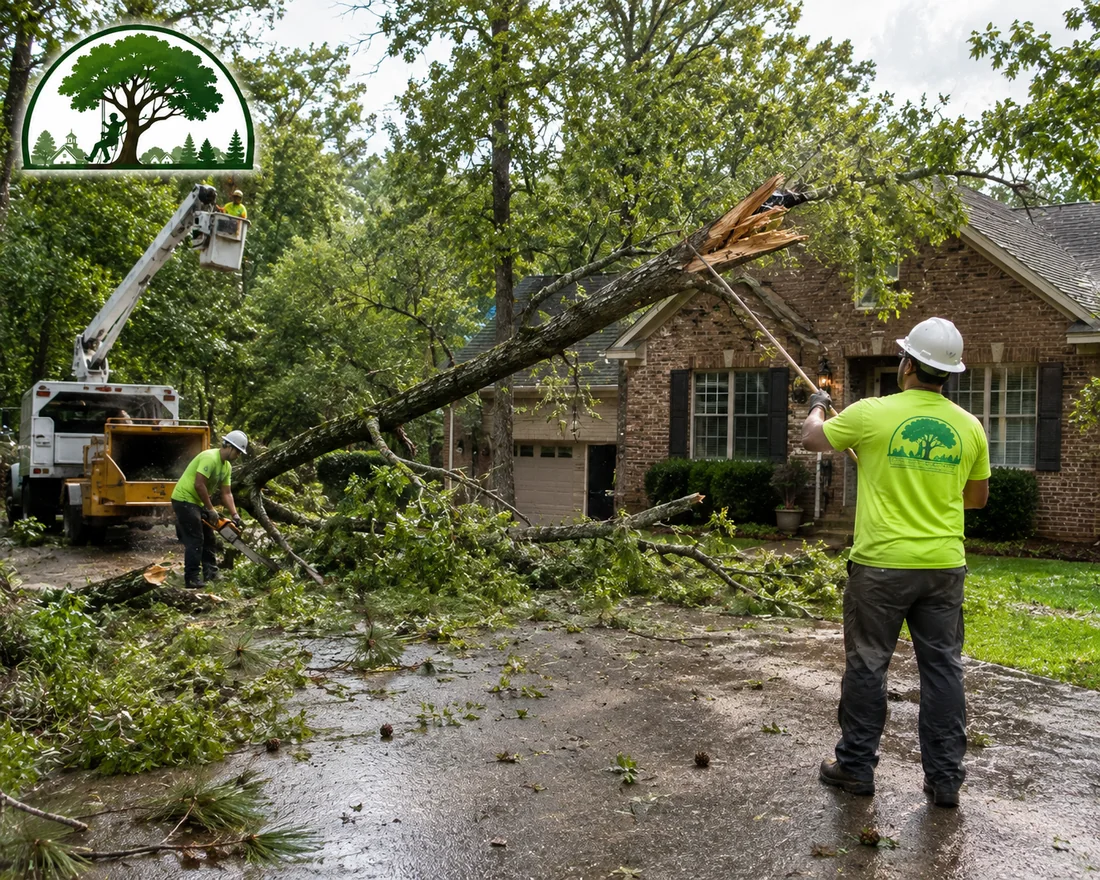
The weak, fast-growing shoots that replace the original crown are prone to snapping. A topped tree may look shorter and safer, but the branches that regrow are more likely to break and fall, especially during a storm. These falling limbs can damage roofs, cars, fences, and anything else below them. In many cases, the entire tree becomes so unstable that it splits or falls over in high winds. The homeowner who wanted to reduce storm risk has actually increased it.
Accelerated Decay and Disease
Each topping cut is a large, open wound that the tree cannot close quickly. Over time, these wounds allow rot to enter the trunk. The decay spreads inward and downward, hollowing out the tree's core. A tree that has been repeatedly topped may look healthy on the outside but be structurally unsound inside. This internal decay is not visible until a branch fails or the tree falls, often causing significant damage.
Costly Ongoing Maintenance
Because the new growth is so dense and weak, a topped tree requires frequent pruning to keep it from becoming a hazard again. The tree will need to be trimmed every year or two, which is more expensive than a one-time structural pruning would have been. If the topping was done poorly, the tree may eventually need to be removed entirely. Removal of a large tree is far more costly than a proper pruning job.
Unnatural Appearance
Topping destroys the natural shape and beauty of a tree. The resulting growth is a thicket of spindly, vertical shoots that look unnatural and unattractive. For many homeowners, the aesthetic loss is a constant reminder of a bad decision. A properly pruned tree retains its natural form and enhances the landscape.
Reduced Property Value
Mature trees add significant value to a home. A healthy, well-shaped tree can increase property value by thousands of dollars. A topped tree, on the other hand, is a liability. It is a sign of poor tree care, and it can lower the perceived value of a property. Potential buyers may see the topping as an indication that other maintenance has been neglected.
Better Alternatives to Topping
If topping is not the answer, what is? A professional tree pruning service offers several safer and more effective techniques for managing tree size and shape. The right method depends on the tree species, its age, and the goals you have for it.
Crown Reduction
Crown reduction is the best alternative to topping. It involves cutting back the ends of branches to a lateral branch that is at least one-third the diameter of the cut branch. This preserves the tree's natural shape while reducing its overall height and spread. The cuts are made at the branch collar, allowing the tree to seal the wound quickly. Crown reduction is a careful, selective process that should be done by a trained arborist. It keeps the tree structurally sound and reduces the need for frequent follow-up pruning.
Structural Pruning
For young and medium-sized trees, structural pruning is an excellent way to guide the tree's growth. This technique focuses on removing weak, crossing, or poorly attached branches early, so the tree develops a strong central leader and well-spaced limbs. Structural pruning reduces the need for major cuts later and creates a tree that is naturally resistant to storm damage. It is an investment in the tree's long-term health.
Clearance Pruning and Roof Clearance
If your concern is that branches are too close to your house or power lines, clearance pruning is the right approach. This involves removing only the branches that are within a certain distance of the structure, leaving the rest of the crown intact. For roof clearance, a professional can raise the lower canopy without harming the tree's overall structure. This keeps your home safe while preserving the tree's health and appearance.
Dead Branch Removal
Often, what looks like a tree that needs topping is actually a tree with a lot of dead wood. Removing dead branches is a standard part of responsible tree care. It improves the tree's appearance, reduces the risk of falling limbs, and allows the tree to direct its energy to healthy growth. A certified arborist can assess which branches are truly dead and which are still viable.
How to Choose a Tree Pruning Service
When you decide to have your trees pruned, choosing the right professional is critical. A reputable tree pruning service will never recommend topping. Instead, the arborist will evaluate the tree and suggest one of the methods described above. Look for a company that employs certified arborists who understand tree biology and proper pruning techniques. They should be able to explain why topping is harmful and what they plan to do instead.
Before hiring anyone, ask for proof of insurance and check references. A legitimate company will carry liability insurance and workers' compensation coverage. They should also be willing to provide a written estimate that details the work to be done. Avoid companies that offer to top your tree for a low price. That low price often leads to much higher costs later.
For homeowners in Dallas, Georgia, a local tree care service like treeserviceindallas.com provides a range of services including tree removal, trimming, emergency storm response, stump grinding, and debris cleanup. Their focus is on safe, responsible tree care that prioritizes long-term tree health. If you are considering any major pruning work, consulting a professional can save you from the problems that topping creates. A good arborist will help you make decisions that keep your trees healthy and your property safe for years to come. That is the kind of service that understands the difference between a quick fix and a lasting solution. treeserviceindallas.com is one such resource for homeowners who want to avoid the pitfalls of topping and instead invest in proper tree care.
In the end, topping a tree is a decision that almost always leads to regret. It may seem like a shortcut, but the long-term consequences are serious. The tree becomes weaker, more hazardous, and more expensive to maintain. By choosing a professional pruning service that uses proper techniques, you can keep your trees healthy, beautiful, and safe. The small cost of a quality pruning job is a bargain compared to the expense of storm damage, disease treatment, or tree removal down the line. Your trees are a long-term asset. Treat them with the care they deserve, and they will reward you for decades.